


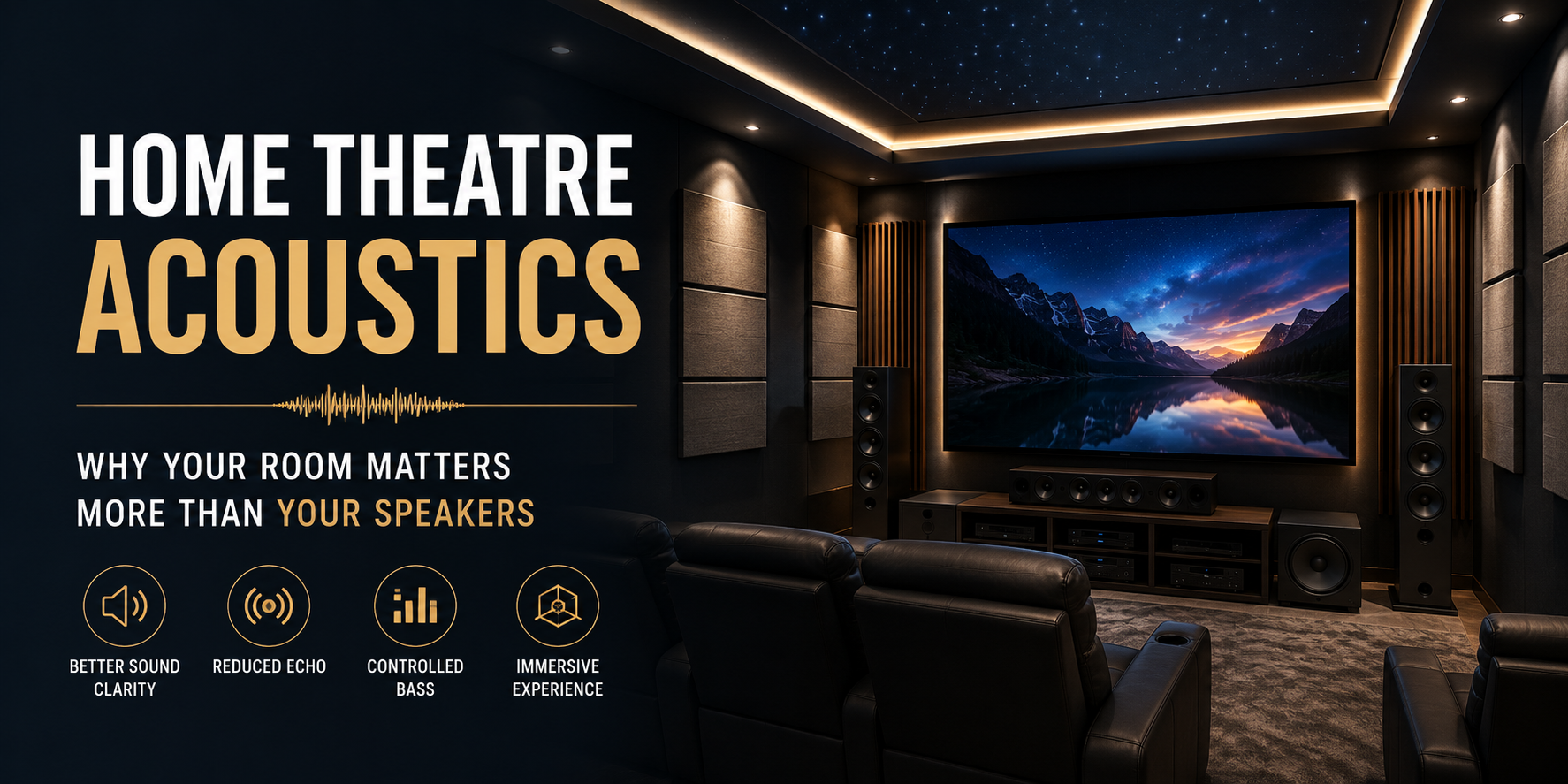
Home Theatre Acoustics: Why Your Room Matters More Than Your Speakers
Many homeowners spend considerable time researching speakers, projectors, televisions, and AV receivers when building a home theatre.
Yet one of the most important factors affecting sound quality is often overlooked:
The room itself.
You can invest in premium speakers, cutting-edge Dolby Atmos technology, and a high-end AV receiver, but if your room has poor acoustics, your home theatre may never perform to its full potential.
In fact, a properly treated room with mid-range equipment can often sound better than an expensive home theatre installed in an acoustically untreated space.
Whether you're planning a dedicated cinema room, upgrading your living room entertainment setup, or building a luxury home theatre, understanding acoustics is essential to achieving truly immersive sound.
In this guide, we'll explain what home theatre acoustics are, why they matter, how acoustic treatment works, and how professional acoustic design can transform your entertainment experience.
What Are Home Theatre Acoustics?
Home theatre acoustics refers to how sound behaves inside a room.
Every sound produced by your speakers interacts with:
- Walls
- Ceilings
- Floors
- Furniture
- Glass surfaces
- Room dimensions
As sound waves bounce around the room, they create reflections that can either enhance or degrade the listening experience.
Good acoustics help ensure:
✔ Clear dialogue
✔ Accurate surround sound
✔ Controlled bass
✔ Better musical detail
✔ More immersive movie experiences
Poor acoustics often result in:
✖ Echoes
✖ Muddy bass
✖ Harsh sound
✖ Dialogue that's difficult to understand
✖ Reduced surround sound effects
This is why professional Custom Home Theatre Design always considers room acoustics alongside equipment selection.
Acoustics vs Soundproofing: Understanding the Difference
One of the biggest misconceptions homeowners have is confusing acoustics with soundproofing.
Although related, they solve completely different problems.
Home Theatre Acoustics
Acoustic treatment improves how sound behaves inside the room.
Its goal is to improve:
- Sound clarity
- Dialogue intelligibility
- Bass control
- Listening comfort
Examples include:
- Acoustic panels
- Bass traps
- Diffusers
- Acoustic ceilings
Home Theatre Soundproofing
Soundproofing prevents sound from entering or leaving a room.
Its goal is to reduce noise transmission.
Examples include:
- Double walls
- Acoustic insulation
- Isolation clips
- Soundproof doors
Simply installing acoustic panels will not stop your neighbours from hearing loud movies.
Likewise, a soundproof room can still sound terrible if acoustics are ignored.
Understanding this distinction helps homeowners make better design decisions from the beginning.
Why Even Expensive Home Theatres Can Sound Bad
A common assumption is:
"More expensive speakers automatically mean better sound."
Unfortunately, this isn't always true.
Consider two examples:
Home Theatre A
Investment:
₹10,00,000
Room:
Untreated
Result:
- Echo
- Poor dialogue clarity
- Uncontrolled bass
Home Theatre B
Investment:
₹3,50,000
Room:
Professionally treated
Result:
- Crisp dialogue
- Controlled bass
- Better surround effects
- Greater immersion
The second room often delivers a more enjoyable experience despite using less expensive equipment.
This is why professional Home Theatre Installation Services place such importance on room design and acoustics.
Common Acoustic Problems Homeowners Experience
Many people know their home theatre sounds "off" but struggle to identify the cause.
Dialogue Isn't Clear
You constantly adjust the volume because voices sound muffled.
Bass Sounds Boomy
Explosions feel overwhelming while other sounds disappear.
Movies Sound Harsh
Certain scenes become uncomfortable at higher volumes.
Music Feels Flat
Instruments blend together instead of sounding distinct.
Surround Effects Feel Weak
Sounds don't appear to move naturally around the room.
These issues are often caused by acoustic problems rather than equipment limitations.
How Acoustics Affect Movies, Music and Gaming
Movies
Proper acoustics improve:
- Dialogue clarity
- Action sequences
- Atmos effects
- Surround immersion
Music
Good acoustics reveal:
- Instrument separation
- Vocal detail
- Soundstage depth
- Dynamic range
Gaming
For gamers, acoustic treatment improves:
- Positional awareness
- Environmental effects
- Directional audio cues
The result is a more engaging and immersive experience across all forms of entertainment.
Understanding Sound Reflections
When speakers produce sound, it reaches your ears in two ways:
Direct Sound
Sound that travels directly from the speaker.
Reflected Sound
Sound that bounces off surfaces before reaching you.
Excessive reflections cause:
- Echo
- Smearing
- Reduced clarity
Professional acoustic treatment controls these reflections to create a cleaner, more accurate listening environment.
What Are Home Theater Acoustic Panels?
One of the most effective acoustic treatments available is the use of home theater acoustic panels.
These panels absorb unwanted sound reflections and help improve clarity throughout the room.
Properly designed home theater acoustic panels can:
- Improve dialogue intelligibility
- Reduce echo
- Enhance surround effects
- Create a more balanced listening experience
Modern home theater acoustic panels are available in various finishes and can be customized to match interior design themes.
For luxury home cinemas, fabric-wrapped acoustic panels often become part of the room's aesthetic while delivering significant performance improvements.
How Acoustic Panels Improve Your Home Theatre Experience
Acoustic panels work by absorbing mid and high-frequency reflections.
Benefits include:
Better Dialogue Clarity
Conversations become easier to understand.
Reduced Listening Fatigue
Movies remain enjoyable even during long viewing sessions.
Improved Surround Sound
Effects become more precise and immersive.
Enhanced Musical Detail
Individual instruments become easier to distinguish.
Professional Home Theater Acoustic Panels often deliver a greater improvement than upgrading speakers alone.
What Are Bass Traps?
While acoustic panels manage mid and high frequencies, bass requires special treatment.
Bass traps absorb low-frequency energy and help eliminate:
- Boomy bass
- Room resonances
- Uneven low-frequency response
Without proper bass management, even premium subwoofers can sound uncontrolled.
What Are Diffusers?
Diffusers scatter sound reflections rather than absorbing them.
Their purpose is to:
- Maintain spaciousness
- Improve soundstage depth
- Preserve room liveliness
Professional cinema rooms often use a combination of:
- Acoustic panels
- Bass traps
- Diffusers
to achieve balanced performance.
Home Theatre Acoustic Treatment for Indian Homes
Acoustic requirements vary depending on the type of home.
Apartments
Common challenges include:
- Open layouts
- Shared walls
- Tile flooring
Recommended solutions:
- Acoustic panels
- Area rugs
- Fabric furnishings
Villas
Larger spaces often require:
- Advanced bass management
- Acoustic ceilings
- Dedicated wall treatments
Dedicated Home Cinema Rooms
Dedicated cinemas offer the greatest flexibility.
Professional acoustic design can optimize:
- Speaker placement
- Reflection control
- Seating positions
- Dolby Atmos performance
This is where working with a professional Home Theatre Company in India delivers significant advantages.
Before and After Acoustic Treatment: What Changes?
Before Treatment
- Dialogue difficult to understand
- Bass feels muddy
- Surround effects weak
- Echo noticeable
After Treatment
- Clear dialogue
- Tight bass
- Precise surround sound
- Better immersion
Many homeowners are surprised by how dramatic the improvement can be.
The Professional Acoustic Design Process
Professional acoustic design typically follows several stages.
Stage 1: Room Assessment
Analyzing room dimensions and materials.
Stage 2: Acoustic Measurements
Identifying problem frequencies and reflection points.
Stage 3: Treatment Planning
Determining:
- Panel locations
- Bass trap placement
- Diffusion requirements
Stage 4: Installation
Implementing treatments while maintaining aesthetics.
Stage 5: Calibration
Optimizing the system for maximum performance.
Acoustic Treatment Roadmap
If you're planning a home theatre, consider this progression:
Step 1
Proper speaker placement
Step 2
First reflection treatment
Step 3
Install home theater acoustic panels
Step 4
Bass management
Step 5
Diffusion
Step 6
System calibration
Following this roadmap ensures every investment contributes meaningfully to performance.
Mistakes Homeowners Should Avoid
Focusing Only on Equipment
Equipment matters, but the room matters just as much.
Using Acoustic Foam Everywhere
Foam alone rarely solves acoustic issues effectively.
Ignoring Bass Management
Bass problems are among the most common acoustic challenges.
Treating Rooms Randomly
Professional planning is essential for achieving balanced results.
Choosing Brands Before Room Design
Even the Best Home Theatre Brands cannot overcome poor room acoustics.
This is why room design should always precede equipment selection.
How Much Does Home Theatre Acoustic Treatment Cost?
Costs vary depending on:
- Room size
- Treatment type
- Design complexity
- Aesthetic requirements
Basic acoustic improvements may begin from a few thousand rupees, while dedicated luxury cinema rooms often incorporate comprehensive acoustic treatments as part of the overall project budget.
The investment is often far less than upgrading speakers while delivering significantly greater improvements in performance.
Why Luxury Home Theatres Require Acoustic Design
Luxury homeowners expect:
- Exceptional sound quality
- Clean aesthetics
- Seamless integration
Modern acoustic solutions allow homeowners to conceal treatments within:
- Fabric walls
- Decorative panels
- Architectural features
The result is a room that looks stunning while performing at the highest level.
Professional Residential AV Solutions combine acoustics, audio, video, lighting, and automation into a cohesive entertainment environment.
Choosing the Right Equipment After Acoustics
Once acoustics are addressed, selecting the right equipment becomes far easier.
If you're comparing options, our guide on Which Home Theatre Brand Is Best explores leading brands and their strengths.
Popular options include:
- Bose
- JBL
- Klipsch
- Denon
- Yamaha
- Marantz
Premium systems such as a Bose 5.1 Home Theatre System or a larger Bose 7.1 Home Theatre Price in India setup can benefit tremendously from proper acoustic treatment.
Final Verdict
When building a home theatre, most homeowners focus on equipment.
Professionals focus on the room.
The truth is that room acoustics often have a greater impact on sound quality than upgrading speakers, amplifiers, or displays.
Whether you're creating a living room entertainment setup or a dedicated cinema space, investing in acoustic design can dramatically improve dialogue clarity, bass performance, surround sound immersion, and overall enjoyment.
The best home theatres aren't built around products.
They're built around experiences.
And great experiences begin with great acoustics.
Frequently Asked Questions
What are home theatre acoustics?
Home theatre acoustics refers to how sound behaves within a room and how room treatments improve audio performance.
Are acoustic panels worth it for a home theatre?
Yes. Properly installed home theater acoustic panels can significantly improve clarity, reduce reflections, and enhance immersion.
Do acoustic panels soundproof a room?
No. Acoustic panels improve sound quality inside the room but do not prevent sound transmission.
How many acoustic panels does a home theatre need?
The number depends on room size, layout, and acoustic requirements.
What is more important: speakers or acoustics?
Both matter, but acoustics often have a greater impact on the final listening experience than equipment upgrades.
Can acoustic treatment improve Dolby Atmos performance?
Absolutely. Acoustic treatment helps reveal Atmos effects more clearly by reducing unwanted reflections and improving overall sound accuracy.
Comments (0)
No comments yet. Be the first to share your thoughts!
Leave a Comment