


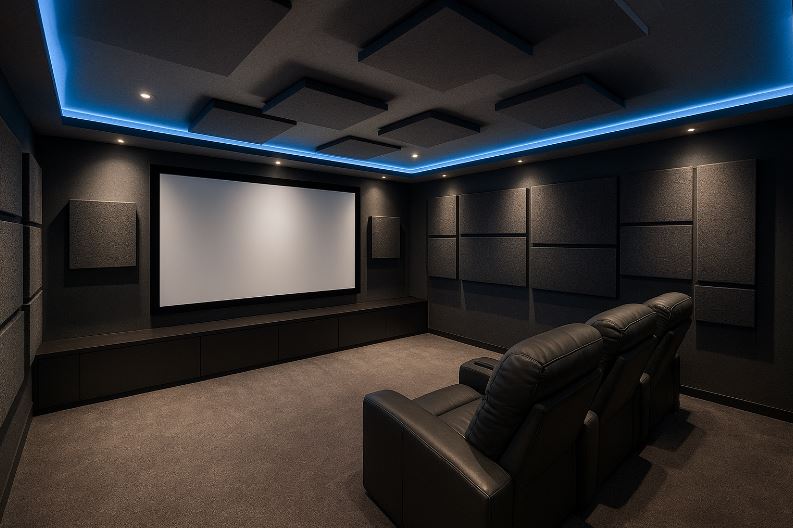
Acoustic Wall Panels Home Theater: The Complete Guide to Better Sound and Immersive Cinema
Imagine watching your favourite movie on a large screen with premium speakers, only to struggle to hear the dialogues or feel that something is missing from the experience.
The issue may not be your equipment.
More often than not, the room itself is the problem.
Even the most expensive home theatre systems can suffer from echo, muddy bass, and poor sound clarity if the room isn't acoustically treated.
This is exactly why acoustic wall panels home theater solutions have become an essential part of modern home cinema design.
Whether you're building a dedicated cinema room, upgrading your living room entertainment setup, or planning a luxury media room, acoustic treatment can dramatically improve your listening experience.
In this guide, we'll explain everything you need to know about acoustic wall panels for home theaters, including how they work, where they should be installed, and why they often deliver a bigger improvement than upgrading your speakers.
Why Expensive Home Theatres Still Sound Bad
One of the biggest misconceptions among homeowners is believing that buying expensive equipment automatically guarantees great sound.
In reality, sound quality depends on two things:
- The equipment.
- The room itself.
A ₹10 lakh home theatre installed in a poorly designed room can often sound worse than a ₹4 lakh system installed in an acoustically treated environment.
Why?
Because sound doesn't stop once it leaves your speakers.
It bounces off:
- Walls
- Ceilings
- Floors
- Glass surfaces
- Furniture
These reflections can create:
- Echo
- Harshness
- Poor dialogue clarity
- Boomy bass
- Weak surround effects
This is where home theater acoustic panels make a dramatic difference.
What Are Acoustic Wall Panels for Home Theater?
Acoustic wall panels are specially designed panels that absorb unwanted sound reflections and improve the acoustics inside a room.
Their primary purpose is to:
✔ Improve dialogue clarity
✔ Reduce echo
✔ Control reflections
✔ Improve surround sound performance
✔ Create a more immersive cinematic experience
Unlike decorative wall panels, acoustic panels are specifically engineered using sound-absorbing materials that help control how sound behaves inside your room.
Why Are Acoustic Wall Panels Important in a Home Theater?
Movies today are mixed in advanced audio formats such as Dolby Atmos and DTS:X.
These sound formats are designed to create:
- Precise directional audio
- Greater immersion
- Better detail
- Realistic sound movement
However, room reflections can ruin these effects.
Acoustic wall panels help preserve the original sound intended by filmmakers and audio engineers.
The result is:
- Better clarity
- More accurate surround effects
- Tighter bass
- A more engaging movie experience
Common Problems Acoustic Panels Solve
If your room suffers from any of these issues, acoustic treatment may be necessary.
- You struggle to hear dialogues.
- Bass sounds muddy or overpowering.
- Movies sound harsh at higher volumes.
- The room sounds echoey.
- Surround effects feel weak.
- Music lacks detail and separation.
These problems are often caused by poor room acoustics rather than poor equipment.
Benefits of Acoustic Wall Panels for Home Theater
1. Clearer Dialogues
Dialogue is one of the first things that improves after acoustic treatment.
Reflections are reduced, making speech easier to understand.
2. Better Surround Sound
Sound effects become more precise and immersive.
You can better perceive:
- Direction
- Movement
- Distance
This significantly improves Dolby Atmos performance.
3. Tighter Bass Response
Acoustic treatment helps control:
- Boomy bass
- Uneven low frequencies
- Resonance issues
4. Reduced Listening Fatigue
Rooms with excessive reflections can sound harsh and tiring.
Acoustic treatment creates a more comfortable listening experience.
5. Better Music Performance
Music sounds:
- More detailed
- Better separated
- More natural
Acoustic Panels vs Soundproofing
One of the most common misconceptions is assuming that acoustic panels are designed to block sound.
They are not.
Acoustic Panels
Improve sound quality inside the room.
Soundproofing
Reduces sound transmission into and out of the room.
A soundproof room can still sound terrible if it isn't acoustically treated.
Likewise, a room with acoustic panels may still allow sound to travel outside.
Understanding the difference between acoustics and soundproofing is essential when designing a home theatre.
Where Should Acoustic Wall Panels Be Installed?
Proper placement is just as important as choosing the right panels.
Side Walls
Treating the first reflection points improves:
- Dialogue clarity
- Imaging
- Surround effects
Front Wall
Improves front-stage performance and reduces reflections behind the speakers.
Rear Wall
Helps improve immersion and sound balance.
Ceiling
One of the most overlooked areas in home theatre design.
Ceiling reflections can significantly affect dialogue clarity and Atmos performance.
Corners
Bass frequencies accumulate in corners.
Bass traps are often installed here to improve low-frequency performance.
How Many Acoustic Panels Does a Home Theater Need?
The answer depends on:
- Room dimensions
- Construction materials
- Speaker placement
- Listening position
As a general guideline:
Small Rooms
4-6 panels.
Medium Rooms
6-10 panels.
Dedicated Cinema Rooms
10+ panels with additional bass management and diffusion.
Every room behaves differently, which is why professional acoustic design often produces far better results than guesswork.
Types of Acoustic Wall Panels for Home Theaters
Fabric Acoustic Panels
The most popular option for dedicated home cinemas.
Benefits:
- Excellent absorption
- Premium appearance
- Customisable finishes
Wooden Acoustic Panels
Combine aesthetics and performance.
Popular in luxury entertainment spaces.
PET Acoustic Panels
Environmentally friendly and highly versatile.
Bass Traps
Designed to absorb problematic low frequencies.
Diffusers
Scatter reflections and create a more spacious soundstage.
Acoustic Treatment for Living Rooms and Apartments
Apartments often present unique acoustic challenges:
- Open floor plans
- Shared walls
- Limited placement options
- Hard reflective surfaces
Strategic placement of acoustic panels can significantly improve performance without compromising aesthetics.
Acoustic Treatment for Dedicated Home Cinemas
Dedicated cinema rooms require a more comprehensive approach.
This often includes:
- Reflection control
- Bass management
- Diffusion
- Speaker optimisation
Many homeowners work with a professional Home Theatre Company in India to ensure the room is designed correctly from the beginning.
DIY vs Professional Acoustic Treatment
DIY Acoustic Treatment
Pros:
- Lower upfront cost
- Suitable for enthusiasts
Cons:
- Trial and error
- Incorrect panel placement
- Limited performance improvements
Professional Acoustic Design
Pros:
- Precise measurements
- Better aesthetics
- Superior performance
- Customised solutions
Professional design is especially valuable for luxury home cinemas and dedicated media rooms.
Home Theater Acoustic Treatment Cost in India
The cost depends on:
- Room size
- Materials
- Design complexity
- Performance goals
As a general guideline:
| Type of Room | Estimated Investment |
| Living Room Setup | ₹25,000 – ₹75,000 |
| Media Room | ₹75,000 – ₹2,00,000 |
| Dedicated Cinema Room | ₹2,00,000 – ₹10,00,000+ |
Why Acoustics Matter More Than Equipment
This surprises many homeowners.
A properly treated room can deliver a bigger improvement than upgrading your speakers.
Acoustic treatment can make:
- Dialogue clearer
- Bass tighter
- Movies more immersive
- Music more enjoyable
This is why many premium Residential AV Solutions prioritise acoustics before recommending equipment upgrades.
Choosing the Right Home Theatre Equipment
Once room acoustics are addressed, selecting equipment becomes much easier.
If you're comparing different brands, our guide on Which Home Theatre Brand Is Best can help you choose the right system for your room and preferences.
Many homeowners looking for elegant living room solutions also consider a Bose 5.1 Home Theatre System, while larger dedicated cinemas often explore the Bose 7.1 Home Theatre Price in India to understand the benefits of multi-channel surround sound.
If you're planning an entirely new entertainment space, our guide on the Best Home Theatre System in India can help you understand different configurations and budgets.
How Nano Theatre Designs Acoustic Spaces
At Nano Theatre, we believe exceptional home theatres are built around experiences, not products.
Every project begins with understanding:
- The room
- The lifestyle
- The entertainment habits
- The aesthetic goals
Our process includes:
✔ Room analysis
✔ Reflection management
✔ Bass control
✔ Speaker placement
✔ System calibration
The result is a home theatre that sounds as incredible as it looks.
Final Thoughts
Your room plays a far greater role in sound quality than most homeowners realise.
Investing in acoustic wall panels home theater solutions is often one of the most effective upgrades you can make to your entertainment space.
Whether you're building a dedicated cinema room or upgrading your living room, proper acoustic treatment can completely transform your movie, gaming, sports, and music experience.
Because great home theatres aren't defined by expensive equipment alone.
They're defined by the experiences they create.
Frequently Asked Questions
Do acoustic wall panels work for home theaters?
Yes. They improve dialogue clarity, reduce reflections, and create a more immersive listening experience.
Do acoustic panels soundproof a room?
No. Acoustic panels improve sound quality but do not prevent sound transmission.
Where should acoustic panels be placed?
They are commonly installed on side walls, ceilings, rear walls, and first reflection points.
How many acoustic panels do I need?
The number depends on room size, materials, and acoustic requirements.
Are acoustic panels worth it?
Absolutely. In many cases, acoustic treatment provides a greater improvement than upgrading equipment.
Comments (0)
No comments yet. Be the first to share your thoughts!
Leave a Comment